
Low Voltage Switchgear And Switchboards
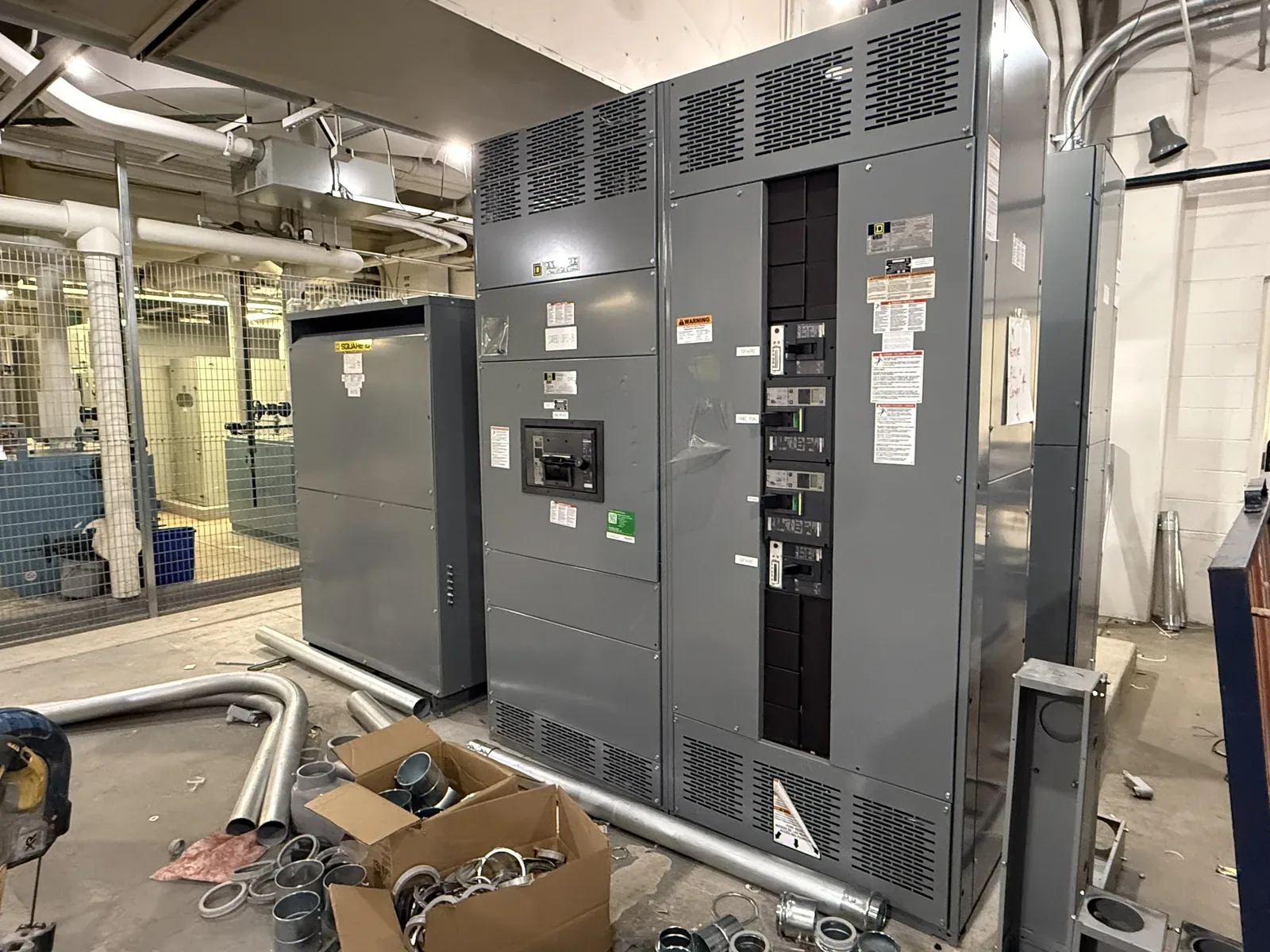
208V, 480V, and 600V equipment forms the foundational layer of commercial and light industrial electrical distribution. Low voltage switchgear, typically engineered and built to strict ANSI C37.20.1 standards, utilizes heavy-duty drawout air circuit breakers and is specifically designed to withstand high short-circuit currents for extended durations. In contrast, low voltage switchboards, governed by UL 891 specifications, often feature fixed-mount molded case or insulated case circuit breakers. Switchboards are ubiquitous in commercial office buildings, retail centers, and smaller manufacturing facilities where the robust compartmentalization of true switchgear is not strictly required. Because this voltage class is deployed across nearly every commercial sector, the secondary market for 480V equipment remains consistently active and highly liquid. The 600V class, while less common in general commercial applications, sees heavy utilization in specific industrial environments and mining operations, creating a specialized but steady demand profile.
The physical construction of low voltage systems varies significantly based on the application environment and the required continuous bus ratings, which generally range from 800A up to 5000A. Indoor installations typically utilize standard NEMA 1 enclosures, while outdoor applications require NEMA 3R weather-resistant housings to protect the internal buswork from environmental degradation. Manufacturers such as Square D, Eaton, GE, and Siemens dominate this space, and their interchangeable components make these lineups highly desirable for facility upgrades. When evaluating low voltage switchgear, buyers look closely at the continuous current rating and the physical condition of the drawout mechanisms. These mechanical components experience significant wear over decades of operation, and their integrity is paramount for safe redeployment. Furthermore, the presence of modern arc-resistant construction per ANSI C37.20.7 significantly elevates the value of a low voltage lineup in the secondary market.
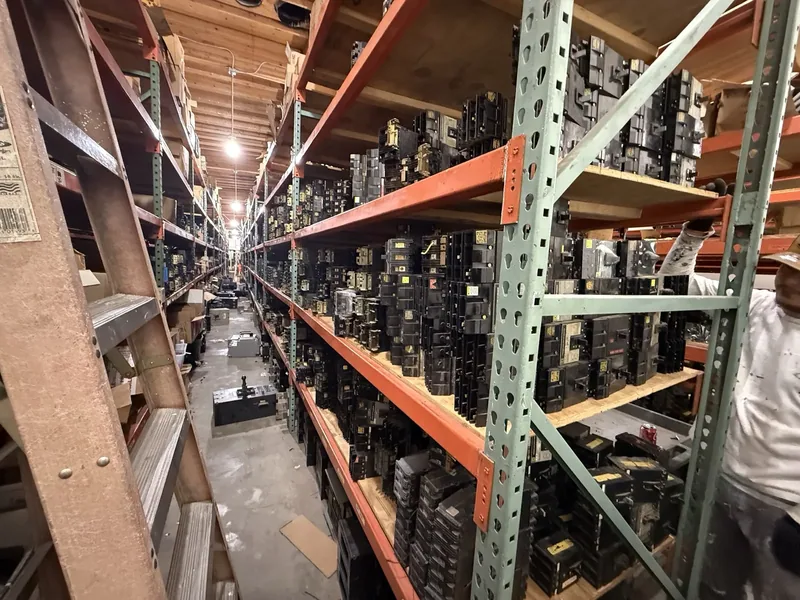
Resale demand for low voltage switchgear is fundamentally driven by the sheer volume of facilities operating at 480V. However, because new low voltage equipment is relatively easier to procure than medium voltage systems, the secondary market heavily favors modern, well-maintained lineups equipped with advanced solid-state trip units rather than obsolete thermal-magnetic devices. Older vintage equipment, such as legacy ITE or Allis-Chalmers low voltage switchgear, still holds substantial value, but this value is primarily derived from its hard-to-find replacement breakers rather than complete lineup redeployment. Identifying the exact voltage and bus rating on the master nameplate allows our purchasing team to determine whether the equipment is suitable for complete refurbishment or if it is better suited for component harvesting to support legacy installations.
Medium Voltage Switchgear Buyers
Moving up the distribution chain, the 4.16kV and 5kV voltage classes serve heavy industrial plants, large institutional campuses, and municipal water treatment facilities. This medium voltage equipment is typically metal-clad per ANSI C37.20.2, featuring heavily compartmentalized construction, grounded metal barriers between all high-voltage sections, and drawout circuit breakers. Historically, these systems utilized massive air-magnetic interrupters, but modern iterations rely almost exclusively on vacuum interruption technology due to its superior reliability and smaller physical footprint. The 5kV class bridges the gap between utility distribution and facility-level utilization, making it a critical component in unit substations where incoming utility power is stepped down for heavy motor loads and large chiller plants.
The 13.8kV and 15kV class represents the undisputed workhorse of both industrial distribution and utility infrastructure. Facilities operating large continuous processes, such as petrochemical refineries, steel mills, and pulp manufacturing plants, rely heavily on 15kV metal-clad switchgear to manage massive power requirements safely. Bus ratings at this level typically range from 1200A to 3000A, requiring substantial copper buswork and robust mechanical bracing. The resale market for 15kV equipment is exceptionally deep because lead times for new custom-engineered medium voltage switchgear can stretch well beyond a year. Facilities facing catastrophic failures, transformer replacements, or rapid expansion projects frequently turn to the secondary market to source refurbished 15kV lineups, driving strong, continuous acquisition demand for surplus assets in this specific voltage tier.
At the upper end of the medium voltage spectrum, the 27kV through 38kV classes are primarily utilized in utility substations, large renewable energy tie-ins like wind and solar collector substations, and heavy mining operations. Equipment at this level often employs SF6 gas-insulated mechanisms or advanced high-voltage vacuum interrupters to manage the extreme arc energy present during fault clearing. Due to the highly specialized nature of 38kV applications, the buyer pool is narrower than that of 15kV systems, but the immense capital cost of new equipment ensures a robust secondary market for well-maintained surplus. Whether dealing with a compact 5kV indoor lineup or a massive 38kV outdoor walk-in aisle enclosure, the physical footprint and weight of medium voltage gear require specialized rigging and transportation during the removal process.
Why Nameplate Ratings Drive The Resale Market
When facility engineers contact us to evaluate surplus electrical infrastructure, the voltage class on the master nameplate is the very first piece of data we request. The voltage rating dictates the physical insulation requirements, the necessary clearance distances between phases, and the overall architectural footprint of the equipment. A lineup designed and insulated for 4.16kV cannot simply be repurposed for a 13.8kV application, meaning the voltage class immediately defines the potential buyer pool in the secondary market. Furthermore, the Basic Impulse Level (BIL) rating, which indicates the equipment's ability to withstand transient overvoltages such as lightning strikes or switching surges, is directly tied to the voltage class. Matching the correct BIL rating—such as a 95kV BIL versus a 110kV BIL on a 15kV system—is a strict engineering requirement for matching surplus gear to a new installation environment.
Beyond the nominal voltage, the continuous current rating and the momentary short-circuit withstand capabilities are critical factors in determining asset value. The continuous rating, expressed in amperes, defines the maximum normal load the busbar system can carry without exceeding strict temperature rise limits. Meanwhile, the momentary rating dictates the equipment's ability to survive the massive mechanical and thermal stresses of a downstream fault before the breaker clears the circuit. In the resale market, switchgear with higher bus ratings and superior fault-clearing capabilities commands a premium, as it offers greater flexibility for redeployment in demanding industrial environments with high available fault currents from the utility.
Accurately identifying these parameters before de-installation ensures a smooth and efficient acquisition process across our 10-state service area, which includes Texas, Florida, New York, Georgia, South Carolina, North Carolina, Virginia, Ohio, Pennsylvania, and Connecticut. Because we are a direct buyer that pays upfront before our trucks leave your facility, we rely on clear nameplate data to formulate our purchase offers. It is important to note that our crews do not perform energized work; all equipment must be completely de-energized, isolated, and verified safe by your facility's electrician or utility provider before our personnel begin the removal process. By providing comprehensive nameplate information, sellers enable us to quickly assess the equipment's technical specifications and execute a safe extraction.
Key Nameplate Specifications To Identify
- Nominal voltage class (e.g., 480V, 5kV, 15kV)
- Maximum design voltage
- Basic Impulse Level (BIL) rating
- Continuous current bus rating in amperes
- Short-circuit interrupting capacity
- Enclosure type (NEMA 1, NEMA 3R)
- Manufacturing standard (ANSI C37.20.2, UL 891)
- Date of manufacture and original manufacturer
Related seller guides
Electrical switchgear buyers
Facility managers and demolition contractors often struggle to distinguish between genuine electrical switchgear buyer…
What is it worth
Facility managers and electrical contractors frequently ask how we determine the value of surplus or retired electrica…
Whole lineup or sections
Facility managers and demolition contractors often face a critical decision when retiring electrical infrastructure: w…
Questions sellers ask
Why is the 15kV voltage class in such high demand?
The 15kV class is the standard distribution voltage for most heavy industrial facilities and utility networks. Because new 15kV metal-clad switchgear requires extensive engineering and long manufacturing lead times, facilities often seek refurbished units to quickly resolve outages or expand capacity. This consistent industrial reliance creates a highly active secondary market for surplus 13.8kV and 15kV equipment.
Do you purchase older air-magnetic medium voltage switchgear?
Yes, we purchase legacy air-magnetic switchgear, though its primary value often lies in the internal components rather than the complete lineup. Many facilities still operate older 5kV and 15kV systems and require replacement drawout breakers to maintain their aging infrastructure. We evaluate these older systems based on the condition of the interrupters, mechanical operating mechanisms, and internal buswork.
How does the enclosure type affect the removal process?
Indoor NEMA 1 switchgear typically requires careful navigation through facility corridors, loading docks, and doorways during the extraction process. Outdoor NEMA 3R enclosures, particularly walk-in aisle configurations, often require heavy cranes and flatbed trailers for safe removal from the site. Our crews handle the specialized rigging for both environments once the equipment has been properly de-energized and isolated by your electrical contractor.
Ready to move it out?
To receive a purchase offer for your surplus electrical infrastructure, please send us clear photos of the master nameplate showing the manufacturer, equipment type, voltage class, and continuous bus rating. We also require wide-angle photos of the complete lineup and a brief description of the electrical room's access constraints, such as narrow doorways or loading dock availability. You can reach our purchasing team at (954) 740-1983 or email your equipment details directly to electricalequipmentbuyers@gmail.com to begin the evaluation process.